Play-based learning goes way beyond just entertaining children. UNICEF states, “Play is one of the most important ways in which young children gain essential knowledge and skills”. Parents worry about their children’s learning progress. Yet the best learning might happen during playtime.
Learning through play makes education active and meaningful. Your child becomes more engaged and socially interactive. Research shows guided play boosts children’s literacy and numeracy skills. Regular play experiences improve working memory, attention, and problem-solving abilities. These skills build the foundation for academic success and lifelong learning.
This complete guide will show you play-based learning at home. The American Academy of Pediatrics confirms play’s positive effects on brain development and functioning. Throughout this piece, you’ll learn how to use these benefits to support your child’s cognitive, social, and emotional growth.
Why Play-Based Learning Makes Kids Smarter
Play does more than just entertain children – it builds their brains and creates lasting cognitive benefits. Studies show that learning through play works better than traditional teaching methods for young learners. This natural approach taps into children’s curiosity while they develop skills they’ll use their whole lives.
The science behind learning through play
The brain develops fundamentally through play. Kids come into the world as natural scientists, ready to learn and experiment through playful activities. Their brain architecture grows stronger as neural connections form, especially during early childhood when the brain changes most easily.
Research proves that guided play works better than direct teaching for kids under eight years old. Some skills, like learning the alphabet, need direct instruction, but studies show the best results come from mixing short lessons into play-based activities.
How play activates multiple brain areas
Play stands out because it works on many brain regions at once. Kids use their:
- Prefrontal cortex – responsible for problem-solving, decision-making, and self-regulation
- Hippocampus – essential for memory formation and learning
- Amygdala – processes emotions and social connections
- Pons – helps regulate attention and arousal
The brain releases important chemicals during play. Dopamine brings pleasure and reward, while norepinephrine helps learning at synapses and makes the brain more adaptable. These chemical changes create perfect conditions for learning while kids have fun.
Long-term academic and life benefits
Play benefits last well beyond childhood. Just one hour of active play each day helps kids think more creatively and handle multiple tasks better. These early experiences lead to measurable academic success.
Research reveals an interesting pattern – third-grade social skills learned through play relate more strongly to eighth-grade reading and math scores than actual third-grade academic performance. This shows how play-based social-emotional skills become the foundation for later academic achievement.
Executive functioning skills – including working memory, flexible thinking, and self-control – develop through play and become essential for school readiness and lifelong success. Play-based learning helps kids gain these crucial abilities while they stay excited about discovering new things.
Cognitive Skills Strengthened Through Play

Children develop significant cognitive abilities through hands-on experiences every time they play. Their interactions with toys, peers, and surroundings help them build the mental skills that are the foundations of academic success.
Critical thinking and decision-making
Play turns children into skilled decision-makers who can assess options and solve problems. Children find solutions without adult help while building dens or creating obstacle courses. This natural problem-solving builds probabilistic thinking—knowing how to predict outcomes based on current understanding and assess risks. Children experiment with different approaches through block play and construction activities that promote critical reasoning abilities in any discipline.
Spatial awareness and math readiness
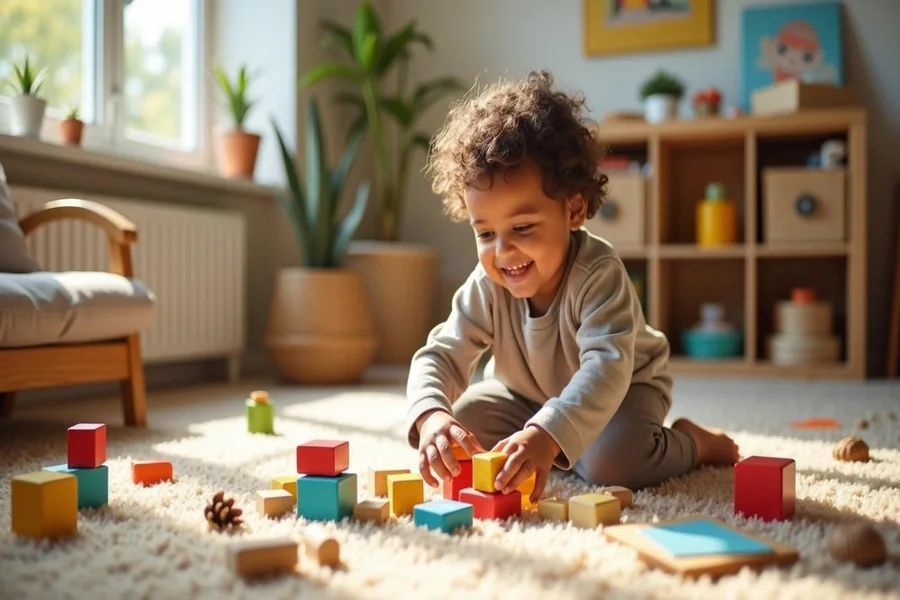
Block building and puzzles boost spatial reasoning—a key predictor of future success in STEM fields. Children grasp balance, dimensions, and geometric concepts by stacking blocks. These spatial skills connect directly to mathematical thinking as they explore measurement, volume, and classification. Object manipulation during play builds spatial awareness that supports future learning in geometry, physics, and engineering.
Language development through storytelling
Storytelling creates powerful language learning moments during play. The process does more than entertain—it helps children expand their vocabulary, use complex sentences, and improve comprehension. Children practice communication skills and try new language patterns in a relaxed setting. Their vocabulary grows, sentence structure improves, and listening skills develop naturally through imaginative play.
Executive function: focus, memory, and planning
Play works like “brain air traffic control” and develops executive function skills—working memory, inhibitory control, and cognitive flexibility. These abilities let children retain information, control impulses, and switch between tasks. Games designed to boost executive function help children follow instructions, remember sequences, and manage emotions better. Simple games like Simon Says and Red Light/Green Light strengthen these vital mental abilities.
Social and Emotional Growth Through Play
Play shapes both little hearts and social skills, not just intellectual abilities. Children find a safe space to practice real-life interactions and develop emotional intelligence through social play during their childhood years.
Learning cooperation and turn-taking
Children learn to work with others instead of competing against them through cooperative play. Playing together helps them practice essential social skills such as sharing resources, taking turns, and setting fair rules. These early interactions become the foundation for healthy relationships throughout their lives. Children develop patience, communication, and negotiation skills as they wait for their chance to join in turn-taking activities.
Building empathy and emotional awareness
Children’s emotional growth flourishes naturally through play. They learn to recognize and respect others’ feelings and views while playing together. “Feelings Charades” and similar games help them identify various emotions and build their emotional vocabulary. Children who join in pretend play develop the ability to understand different viewpoints as they try various roles and scenarios. This emotional understanding helps them realize that everyone experiences situations differently—a crucial foundation for empathy.
Developing confidence and independence
Children build confidence through child-led play that lets them take risks, make decisions, and taste success. These experiences help shape their positive self-image, which guides them through both success and adversity. Regular playtime helps children develop better self-awareness and empathy—essential elements of emotional intelligence. Their interpersonal relationships, academic performance, and leadership abilities improve as they grow with these skills.
How to Set Up a Play-Based Learning Routine at Home

You don’t need complex setups or expensive materials to create a play-based learning environment that works. A smart approach to your home space and daily routine will help maximize your child’s growth through play.
Designing a flexible daily schedule
Start with a consistent framework that gives children predictability while leaving room for spontaneous activities. Your child should see the visual schedule to understand their daily flow better.
A calm, uncluttered environment also supports focus during play, and simple visual elements, such as black and white paintings on canvas, can help create a balanced space that feels structured without being overstimulating.
Include dedicated play periods balanced with meals, rest, and outdoor activities. Your child might become deeply absorbed in an activity – let them explore further instead of strictly following the schedule.
Choosing the right toys and materials
Pick toys that serve multiple purposes rather than those with single functions. Here are some age-appropriate options:
- For infants: Rattles, textured balls, unbreakable mirrors
- For toddlers: Building blocks, simple puzzles, dress-up clothes
- For preschoolers: Art supplies, construction sets, puppets
Leaves, pebbles, and recycled materials provide rich sensory experiences without any cost.
DIY Creative Activities That Boost Learning at Home
DIY creative projects give children meaningful ways to learn through hands-on play. These activities build focus, problem-solving skills, and confidence while encouraging imagination. Art-based DIY projects work especially well because they combine structure with creative freedom.
Family-centered DIY activities encourage children to learn through creativity, especially when parents and kids work together to turn your picture into a painting as a shared project. Most importantly, DIY play turns learning into a shared, enjoyable experience for both parents and children.
Using guided play to meet learning goals
Guided play lets you set the context while your child leads the exploration. Open-ended questions and thoughtful comments help extend their thinking without taking over the activity.
Conclusion
Play-based learning helps children grow smarter, more confident, and better prepared for life’s challenges. Through play, children naturally strengthen cognitive skills like problem-solving, language development, and executive function while staying engaged and motivated.
Play also supports essential social and emotional growth, helping children build empathy, cooperation, and self-confidence. The best part is that effective play-based learning at home doesn’t require expensive tools or complex plans. With a supportive environment, flexible routines, and meaningful play opportunities, your home can become one of the most powerful learning spaces your child will ever have.